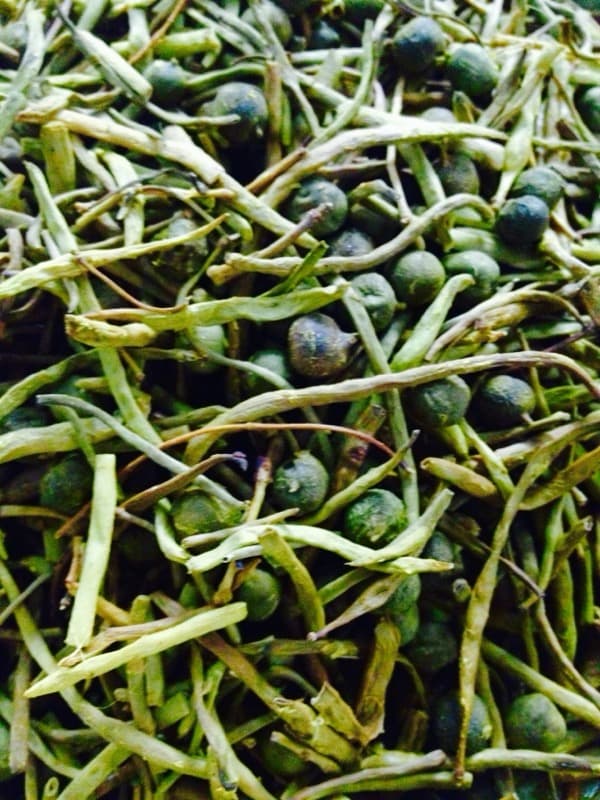
Sangri — The Bean the Desert Calls Sacred
The khejri tree has fed Rajasthan for millennia. 360 people died to protect one grove of it.
In Rajasthan, there is one tree that everyone knows. The khejri tree (Prosopis cineraria) grows across the Thar Desert with an improbable stubbornness — in sand that holds almost no water, through summers that could kill a palm tree, for hundreds of years without anyone planting or tending it. The Marwari community calls it the Kalpavriksha — the wish-fulfilling tree. This is not sentiment. It is history.
What Sangri Is
Sangri is the long, thin bean pod of the khejri tree. It is harvested in summer — around April and May — dried in the desert sun, and stored. Fresh sangri is green and sweet; dried sangri is pale yellow, slightly wrinkled, with a concentrated flavor that is one of the defining tastes of Rajasthani cooking.
Like ker, sangri is not commercially farmed — it grows wild. Families and village communities have traditionally gathered it every season from the trees on their land or nearby. The khejri is common enough that almost every farming family in Rajasthan has access to it, and this shared relationship with the tree has shaped how communities think about land and ownership in the desert.
The Khejarli Massacre of 1730
In 1730, in the village of Khejarli near Jodhpur, a community called the Bishnois did something the world would not fully understand for another 250 years.
The Maharaja of Jodhpur needed timber for lime kilns to build a new palace. His soldiers came to the Bishnoi villages to cut down the khejri trees. The Bishnois refused. When the soldiers began cutting, a woman named Amrita Devi wrapped her arms around the first tree and said: a cut limb can be replaced; a cut head cannot. The soldiers killed her. Then her daughters. Then 360 more men, women, and children of the village — each one killed while hugging a tree to protect it.
The Maharaja, when he heard what had happened, stopped the cutting and issued a royal decree protecting the Bishnoi villages and their trees forever.
The Chipko movement — the 1970s environmental protest the world knows as a landmark in ecological activism — drew directly from this 1730 tradition. The word "chipko" means to hug. The Bishnois invented it.
In The Jidan's Kitchen
Dadi soaks dried sangri overnight before using it. The overnight soak is essential — it restores the texture and removes any residual bitterness. She has a particular way of knowing when it's ready: the color shifts from pale yellow to a deeper gold, and the beans swell to almost twice their dried size.
In the ker-sangri combination, sangri balances ker's sharpness with a gentler, deeper note. The two together are the most distinctively Rajasthani flavor in Indian cooking — a taste that cannot be separated from the desert that produced it.
माँ के हाथ का एहसास
The pickles that carry all these ingredients — made by Dadi's hands in Jodhpur, shipped wherever you are.
Browse PicklesMore from the Desert
KerKer — The Berry That Only the Thar Desert Can Grow
Ker is a small wild berry that grows on thorny desert scrub and survives temperatures that would kill almost everything else. It is the taste that no other ingredient can replicate — the reason Marwari pickle is unlike any other pickle in India.
Read more →
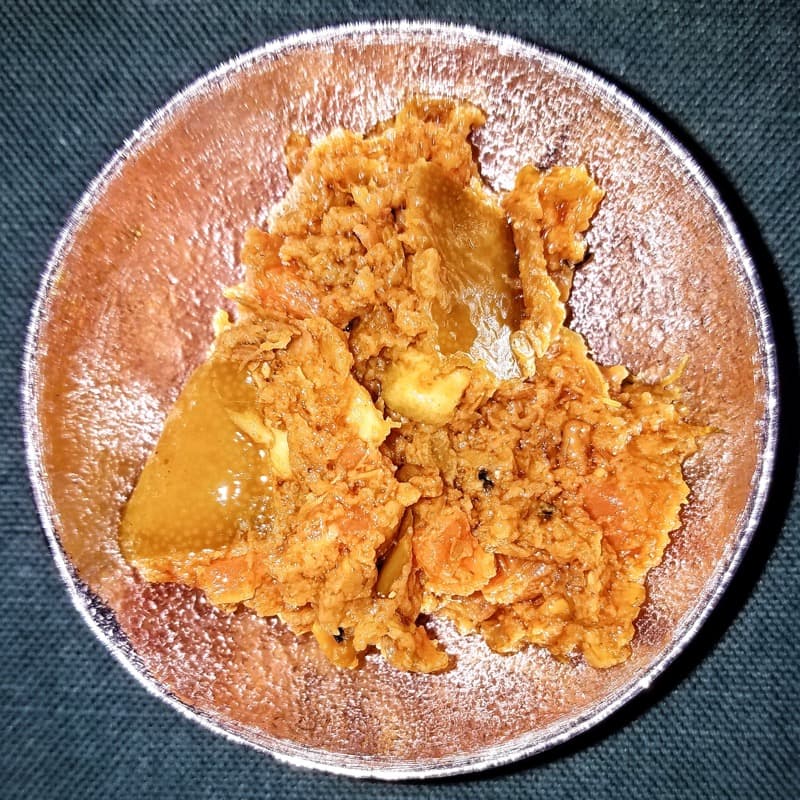 Gunda
GundaGunda — Rajasthan's Sticky, Irreplaceable Secret
If you grew up in a Rajasthani or Gujarati household, you know gunda before you understand what it is — by the sticky texture, the chewy bite, the stone that clings to the flesh unlike any other fruit. If you haven't, gunda is the ingredient most likely to make you say: I have never tasted anything like this.
Read more →
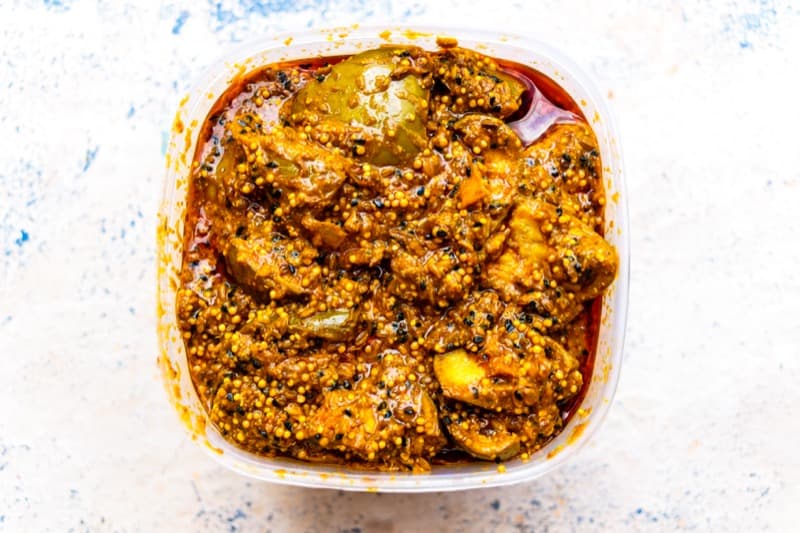 Raw Mango
Kaccha Aam — The Sound of Summer in Every Rajasthani Kitchen
Every Rajasthani kitchen has a sound in May. It's the sound of a knife coming down on a raw mango — that specific crack as the blade meets hard, unripe flesh. In every household that pickles, this sound means summer has arrived. It means the year's most important kitchen work is beginning.
Read more →